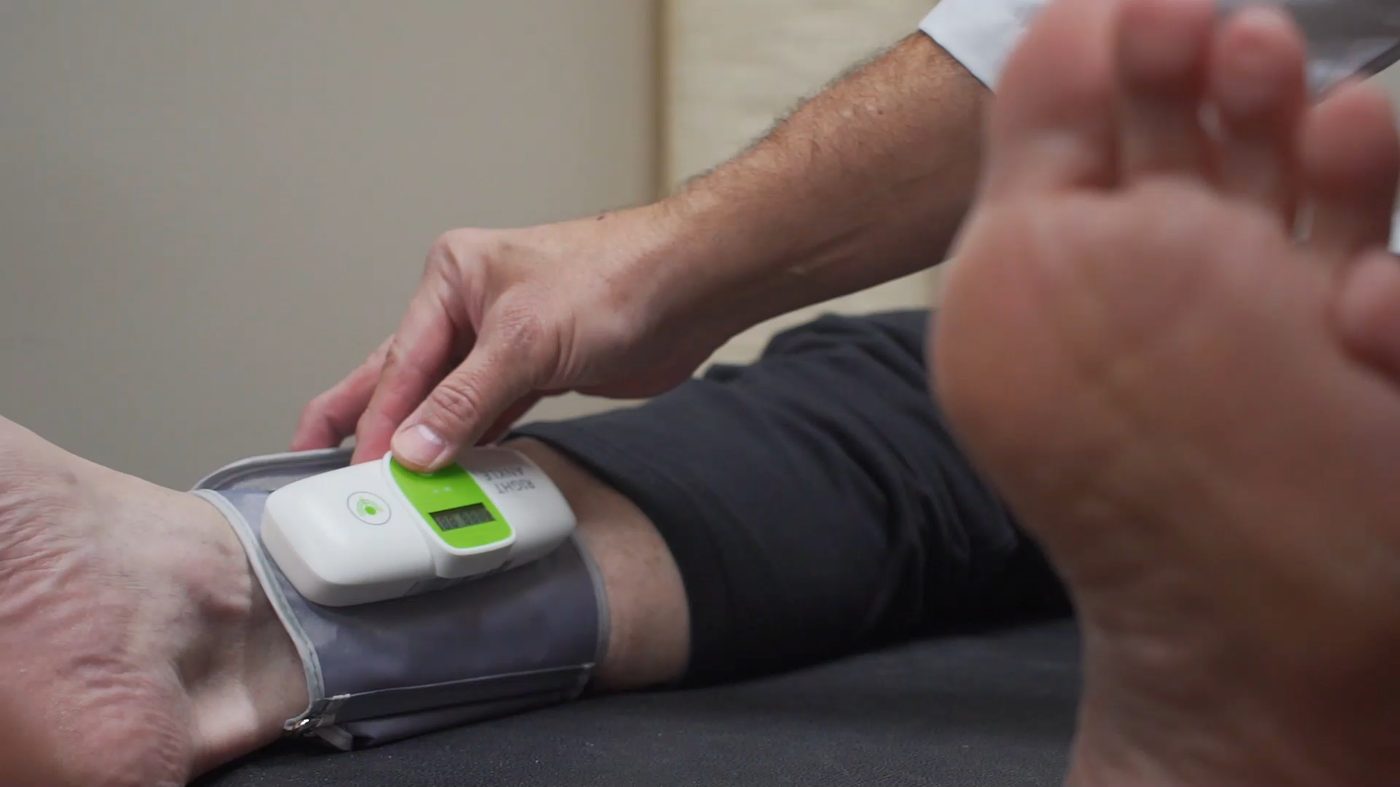
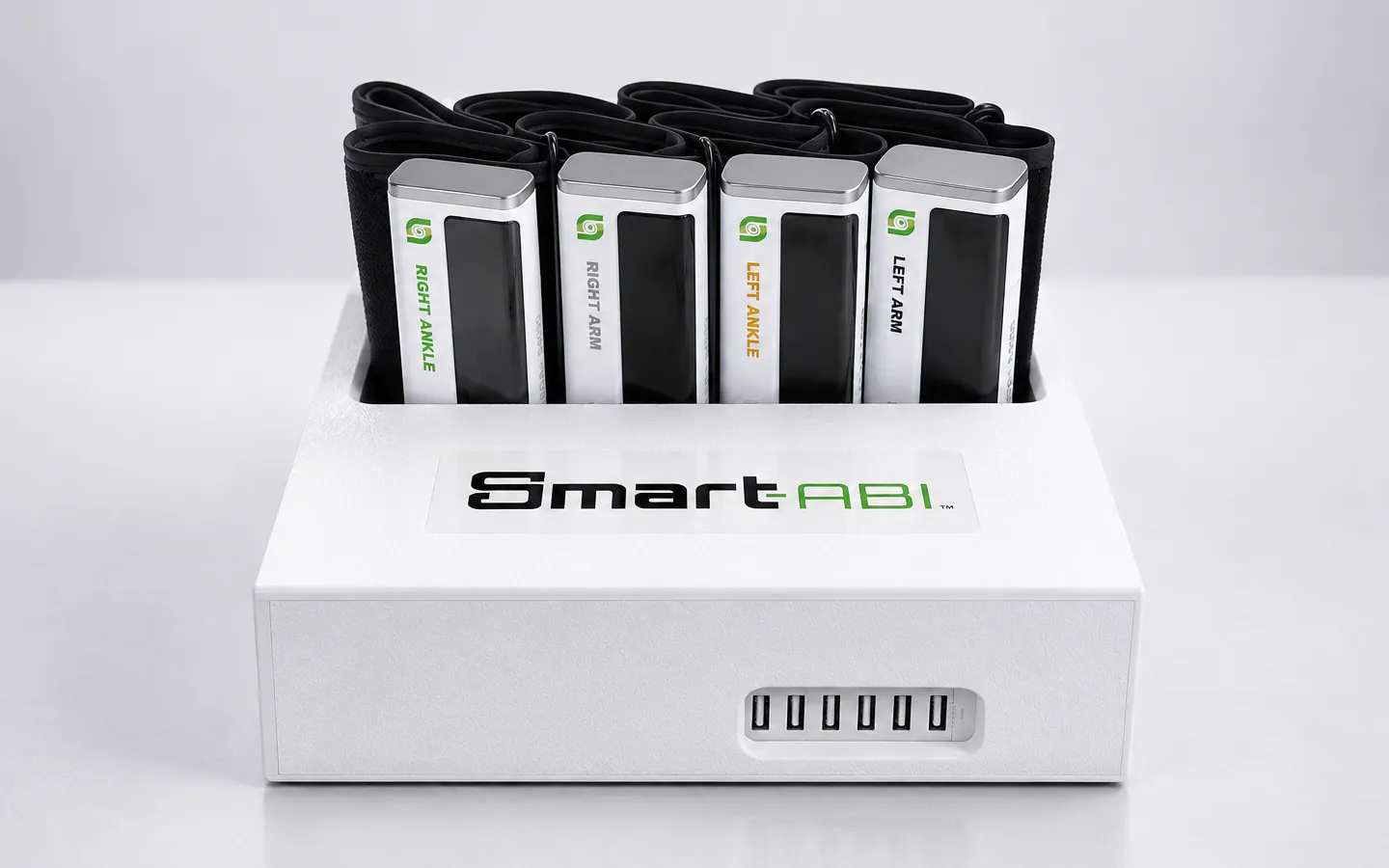
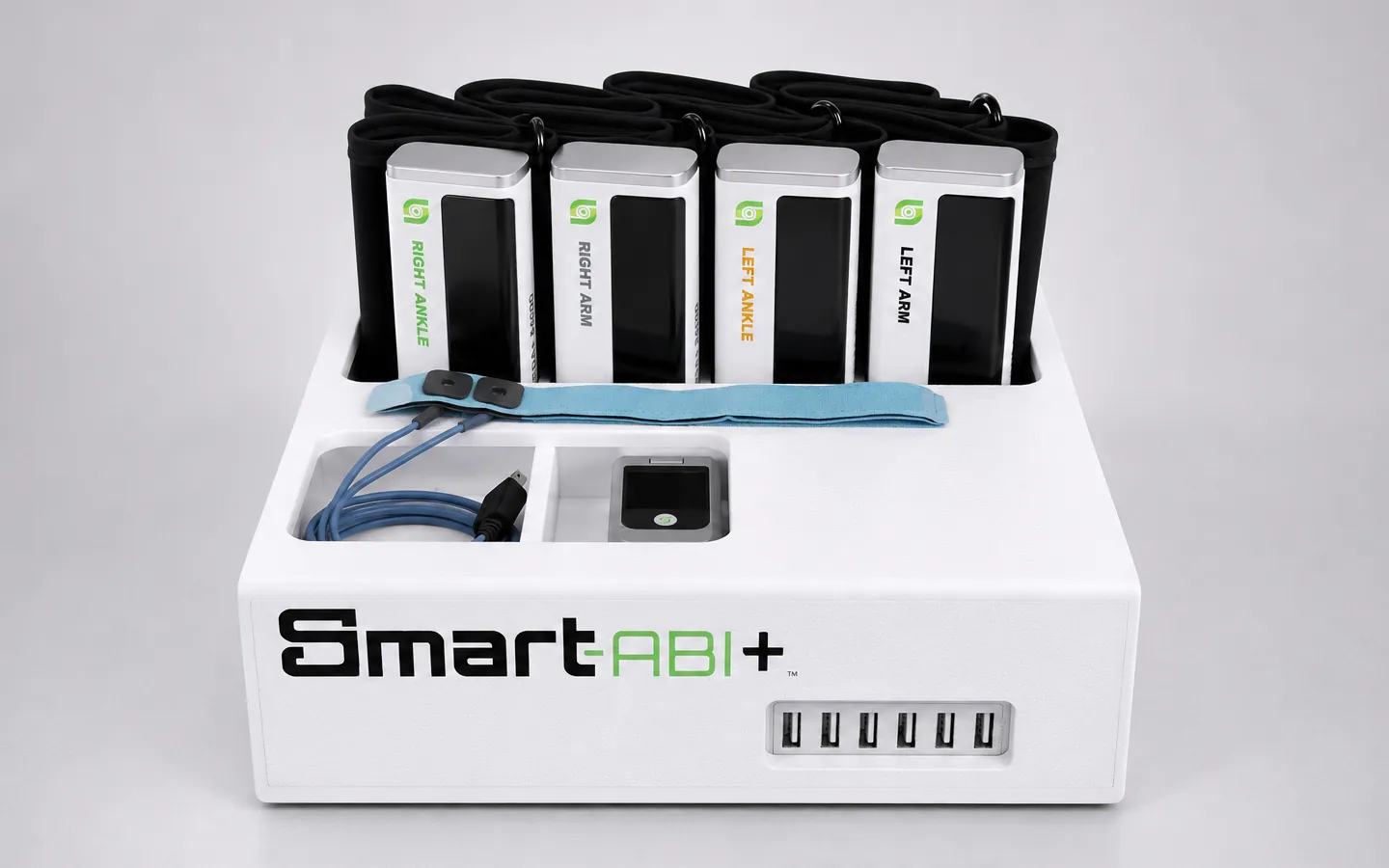
Smart-ABI is a wireless, point-of-care device that performs a true cuff-based, four-limb Ankle-Brachial Index in about five minutes, generating an ABI value plus volume plethysmography records (VPR) waveforms. Smart-ABI+ adds Toe-Brachial Index for the patients where ankle pressures fail.
A wireless, MA-operated cuff measurement at the point of care.
Smart-ABI
PAD detection · any care setting
Wireless, true cuff-based, four-limb ABI with VPR waveforms in about five minutes. The brand flagship and entry-tier device: fast, simple, and built for medical-assistant operation in any care setting.
Adds TBI
Smart-ABI+
ABI + Toe-Brachial Index
Everything Smart-ABI does, plus Toe-Brachial Index (TBI) for patients with incompressible ankle vessels, a common pattern in long-standing diabetes, chronic kidney disease, and advanced age, where ABI alone is insufficient.
Choose your device
Smart-ABI vs Smart-ABI+
Both run the same five-minute, MA-operated workflow and feed the same EMR-ready report. The difference is TBI.
Capability
Smart-ABI
Smart-ABI+
True cuff-based Ankle-Brachial Index (ABI)
✓
✓
Volume Plethysmography Records (VPR) waveforms
✓
✓
Four-limb, wireless measurement
✓
✓
Toe-Brachial Index (TBI)
—
✓
For incompressible ankle vessels (diabetes, CKD, elderly)
—
✓
MA-operated, ~5-minute workflow
✓
✓
EMR-ready, color-coded reports (Smart-ABI Hub)
✓
✓
Not sure which fits your patient mix? A Smart-ABI specialist can help you match the device to the patients you see. Talk to us →
Clinical indications
When to use ABI, and when TBI.
Four indications for each index. Smart-ABI performs the ABI; Smart-ABI+ adds the TBI.
ABI
Ankle-Brachial Index (ABI)
Smart-ABI and Smart-ABI+
Peripheral Arterial Disease (PAD) Diagnosis
ABI is widely used to diagnose PAD, especially in patients with risk factors like diabetes, smoking, or hypertension. It helps in identifying arterial blockages that reduce blood flow to the lower limbs.
Cardiovascular Risk Stratification
ABI serves as an indicator of systemic atherosclerosis and is linked to increased risks of heart attacks and strokes. Low ABI values can identify patients at higher cardiovascular risk.
Monitoring PAD Progression
Physicians use ABI for follow-up assessments in PAD patients to monitor the progression of the disease or the effectiveness of treatments, such as medication or revascularization procedures.
Pre-surgical Evaluation
ABI testing is used preoperatively to assess the vascular status of patients undergoing lower extremity surgeries or interventions, ensuring that sufficient blood flow is present.
TBI
Toe-Brachial Index (TBI) Applications
Smart-ABI+
PAD Diagnosis in Diabetics and Elderly
In cases where arterial calcification in the lower limbs (common in diabetic and elderly patients) may result in falsely elevated ABI readings, TBI is preferred for more accurate detection of PAD. The smaller arteries in the toes are less likely to be calcified.
Assessment of Small Vessel Disease
TBI is useful for evaluating small vessel disease in patients with conditions like diabetes, where the ABI might not reflect the true extent of vascular compromise.
Wound Healing Prognosis
TBI can help in predicting the likelihood of wound healing in the lower extremities, especially in patients with foot ulcers or after amputations.
Follow-up for PAD Patients with Calcified Arteries
For patients whose arteries are non-compressible due to calcification, TBI offers a reliable alternative for assessing blood flow in the lower extremities.
A true ABI test uses inflatable cuffs to measure segmental pressures, not a photoplethysmography (PPG) light signal alone. That distinction matters for both clinical accuracy and the way vascular-study claims are reviewed.
Wireless, four-limb cuff measurement with an ABI value plus VPR waveforms.
90% reported accuracy for ABI with VPR waveforms to diagnose PAD (Hyperion Medical materials).
Designed for CPT 93922 and 93923 vascular-study documentation, with audit-defensible reports.
Color-coded, wireless cuffs with directional arrows, one-click activation, and an audio-guided setup.
Just because a CPT code exists, payment for the service it describes is not guaranteed. See reimbursement & ROI →
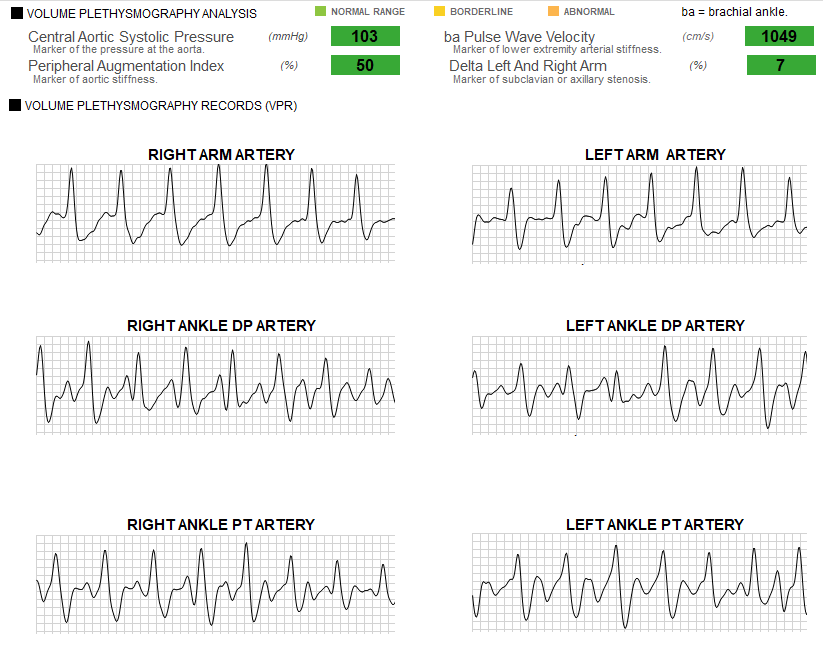
ABI / VPR reportSample report
Analysis markers and volume plethysmography records (VPR) from a Smart-ABI sample report. Patient details removed. Select the image to view it full size.
Who it’s for
PAD detection in any care setting.
Wound care
ABI documentation is now required for many dressing claims. Smart-ABI produces the audit-defensible, five-minute test those claims need.
Documentation
Podiatry & foot-and-ankle
Smart-ABI+ adds TBI for the diabetic and elderly patients where ankle pressures are incompressible and ABI alone is insufficient.
TBI
Cardiology & vascular
A true cuff-based ABI with VPR waveforms for practices that value methodology and audit defensibility.
True ABI
Primary care & NP-led practices
Bring the AHA-recommended ABI into the exam room in five minutes, run by an MA, with a report ready for the EMR.
What is the difference between Smart-ABI and Smart-ABI+?
Smart-ABI performs a true cuff-based, four-limb Ankle-Brachial Index with VPR waveforms. Smart-ABI+ adds Toe-Brachial Index (TBI) for patients with incompressible ankle vessels, common in long-standing diabetes, chronic kidney disease, and advanced age.
How is this different from a PPG-only device?
Smart-ABI is a true cuff-based ABI with volume plethysmography records (VPR), not a photoplethysmography (PPG) substitute. It produces an ABI value plus VPR waveforms designed to meet CMS technical requirements for vascular-study CPT codes.
How long does a test take?
About five minutes of total patient throughput, from entry of patient information to results in hand.
How accurate is the ABI test?
Per Hyperion Medical materials, ABI with volume plethysmography records (VPR) is reported at 90% accuracy to diagnose PAD.
Who can run the test?
Smart-ABI is designed for medical-assistant operation, with color-coded wireless cuffs, directional arrows, one-click activation, and an audio-guided patient setup screen.
Is it HIPAA compliant?
Smart-ABI solutions send and receive data through HIPAA-secure channels and store reports locally and on HITRUST-certified cloud servers.
See the five-minute test in your own workflow.
Book a demo and a Smart-ABI specialist will walk your team through patient selection, the MA-operated workflow, reimbursement, and the report your EMR receives.