Smart-Neuro is a non-invasive autonomic testing solution designed to help support the evaluation of Cardiac Autonomic Neuropathy (CAN) and Peripheral Autonomic Neuropathy (PAN), with a fast workflow, simple setup, and clear, interpretable reports.
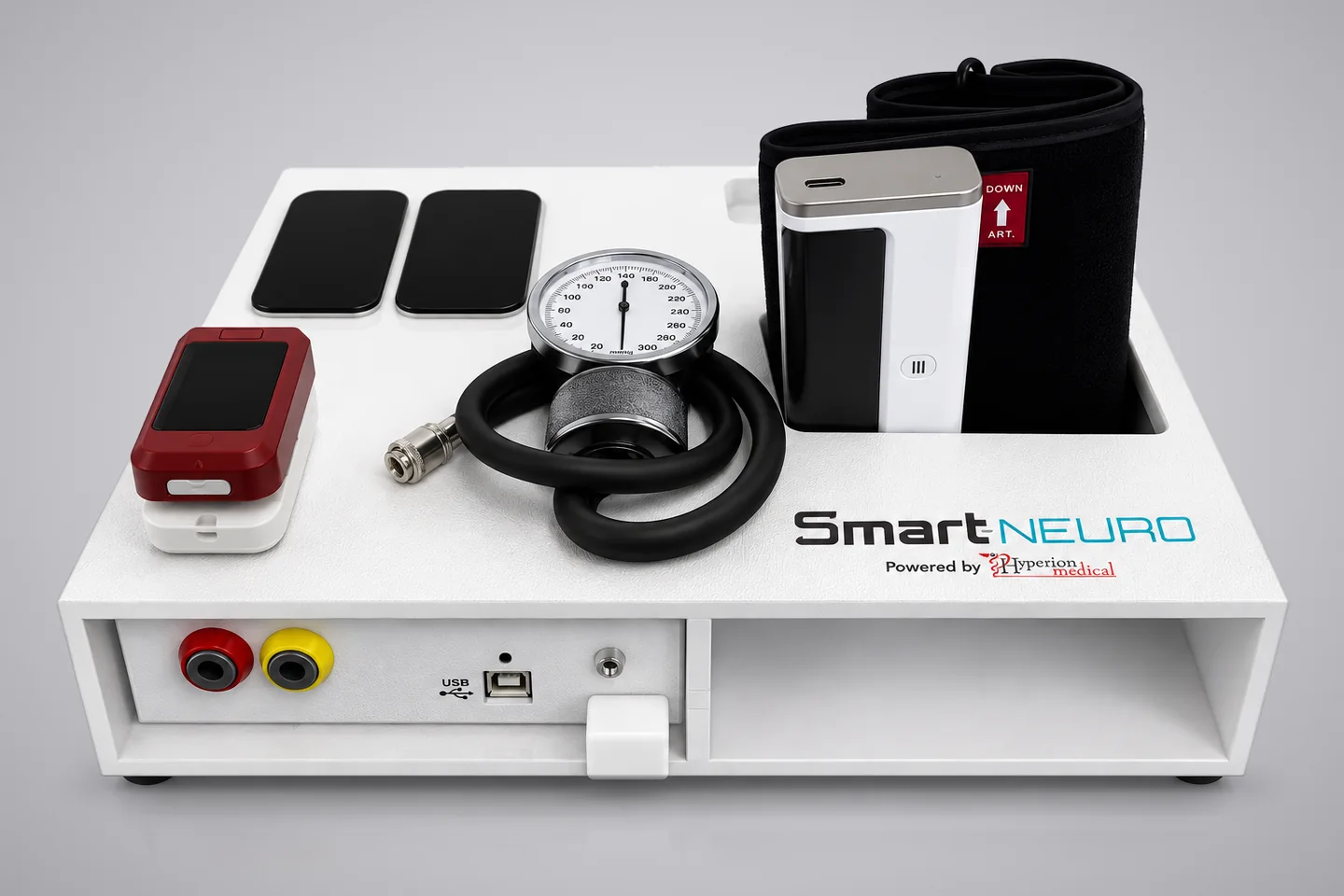
The Smart-Neuro device: blood pressure cuff, pressure gauge, pulse oximeter, and electrode pads.
Why Smart-Neuro
Objective answers where the exam is usually qualitative.
Autonomic involvement is easy to suspect and hard to quantify. Smart-Neuro delivers objective autonomic function assessment that helps you identify involvement earlier and support more informed clinical decisions.
Objective autonomic function assessment instead of a qualitative chart note.
Fast workflow with simple setup that fits into a routine visit.
Non-invasive, patient-friendly testing.
Clear, interpretable reports that streamline integration into clinical workflow.
What Smart-Neuro delivers
Objective autonomic function assessmentYes
Fast workflow, easy setupYes
Clear, interpretable reportsYes
Non-invasive, patient-friendlyYes
CPT 95921 & 95923Compliant
How Smart-Neuro works
Five guided steps, real-time capture.
A simple, repeatable sequence: no specialized technician required.
1
Prepare
Position the patient and review the protocol.
2
Connect
Connect the blood pressure cuff and pulse oximeter.
3
Measure
Capture autonomic responses in real time.
4
Analyze
Advanced algorithms interpret and quantify results.
5
Report
Generate clear, comprehensive reports.
Inside the report
A complete autonomic picture.
Smart-Neuro produces a Cardiac Autonomic Assessment and a Sudomotor Function Analysis, quantifying both branches of the autonomic nervous system.
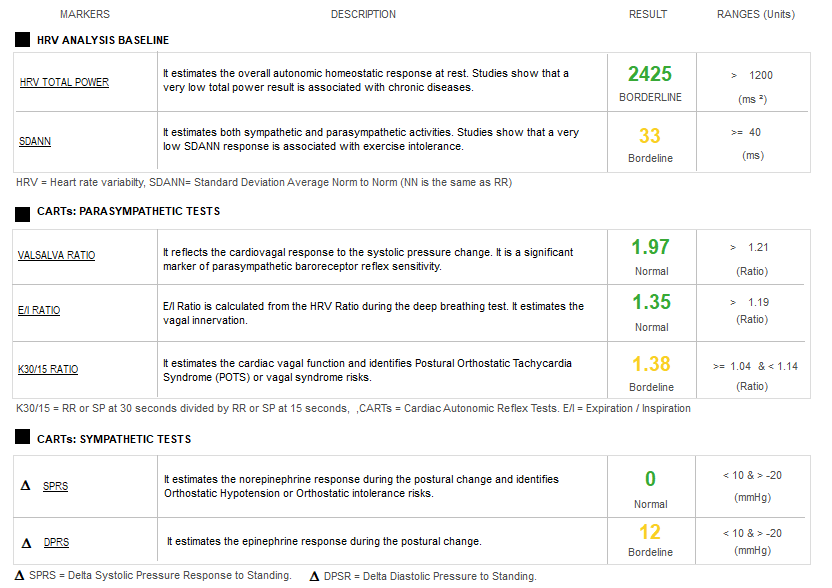
Parasympathetic reflex testsValsalva ratio, E/I ratio, and K30/15 ratio (cardiac autonomic reflex tests, including POTS risk).
Sympathetic reflex testsDelta systolic and diastolic pressure response to standing (orthostatic hypotension / intolerance).
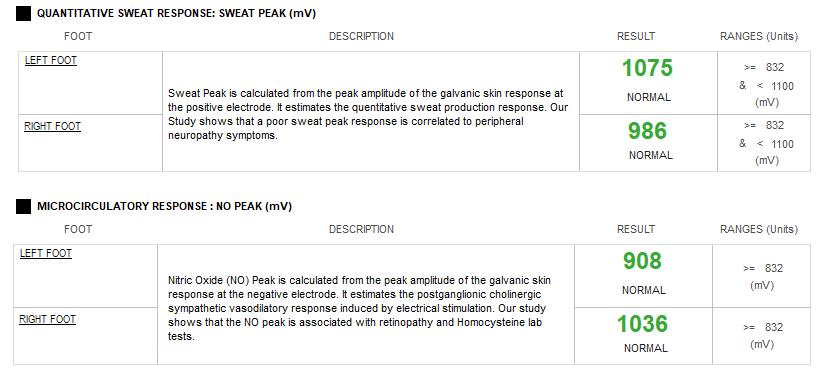
Sudomotor function analysisSweat Peak and Nitric Oxide (NO) Peak by foot, estimating sweat response and microcirculatory response.
Cardiac Autonomic AssessmentSample report
Markers table from a Smart-Neuro sample report. Patient details removed. Select the image to view it full size.
Sudomotor Function AnalysisSample report
Results table from a Smart-Neuro sample report. Patient details removed. Select the image to view it full size.
Report markers per the Smart-Neuro OXI_W (Cardiac Autonomic Assessment) and SWEATC (Sudomotor Function Analysis) sample reports. All results should be considered within the clinical context of the patient; interpretation of the results is the responsibility of the medical doctor.
Clinical applications
When to consider testing.
Orthostatic & syncope symptoms
Orthostatic intolerance, dizziness, or unexplained syncope.
Suspected dysautonomia
Suspected dysautonomia or small-fiber neuropathy.
Diabetic autonomic symptoms
Diabetic patients with autonomic symptoms.
Sweating & vasomotor complaints
Abnormal sweating, GI, bladder, or vasomotor complaints.
Monitoring over time
Monitoring disease progression and treatment response.
Ideal for neurology practices
General neurology, autonomic disorders clinics, peripheral and diabetic neuropathy workups, and longitudinal monitoring.
Questions
Smart-Neuro FAQ
What is Smart-Neuro?
A non-invasive autonomic testing solution designed to help support the evaluation of Cardiac Autonomic Neuropathy (CAN) and Peripheral Autonomic Neuropathy (PAN).
How does it work?
The clinician positions the patient and reviews the protocol, connects a blood pressure cuff and pulse oximeter, captures autonomic responses in real time, and advanced algorithms interpret and quantify the results into a clear, comprehensive report.
Which CPT codes does Smart-Neuro support?
Smart-Neuro is designed for CPT 95921 and 95923 compliance. As always, payment for a service a code describes is not guaranteed and depends on documentation and medical necessity.
When should autonomic testing be considered?
For orthostatic intolerance, dizziness, or unexplained syncope; suspected dysautonomia or small-fiber neuropathy; diabetic patients with autonomic symptoms; abnormal sweating, GI, bladder, or vasomotor complaints; and to monitor progression and treatment response.
Which practices is Smart-Neuro built for?
General neurology, autonomic disorders clinics, peripheral neuropathy evaluation, diabetic neuropathy workups, and follow-up and longitudinal monitoring.
Empower your neurology practice with autonomic insight.
Book a free demonstration and a Smart-Neuro specialist will walk your team through the setup, the five-step workflow, the report, and CPT 95921 and 95923 documentation.